A Defiant Standard: How Virginia’s Flag Embodies Sic Semper Tyrannis in the Shadow of Power
In the discipline of vexillology, the study of flags, and vexillography, the design of flags, certain principles are treated as sacred. The “Good Flag, Bad Flag” doctrine popularized by Ted Kaye champions simplicity, meaningful symbolism, and the avoidance of lettering or seals. By these standards, most American state flags, with their intricate coats of arms set against flat fields of color, serve as cautionary examples rather than models of good design.
Yet there exists a striking exception: a flag that violates nearly every one of these rules and, in doing so, delivers one of the most potent political statements in American heraldry: the Flag of the Commonwealth of Virginia.
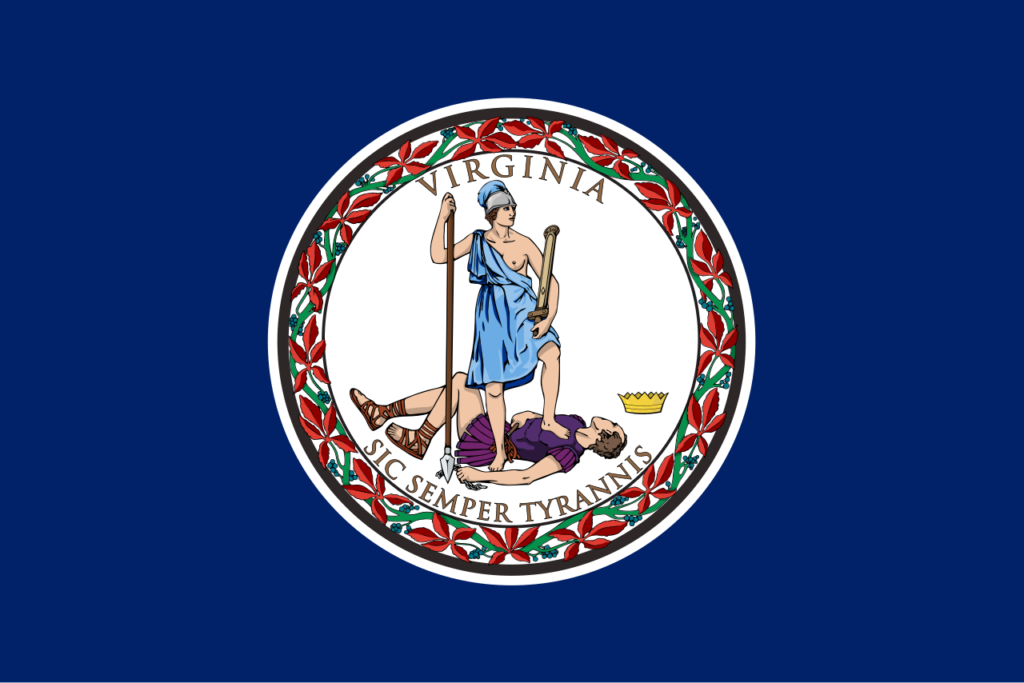
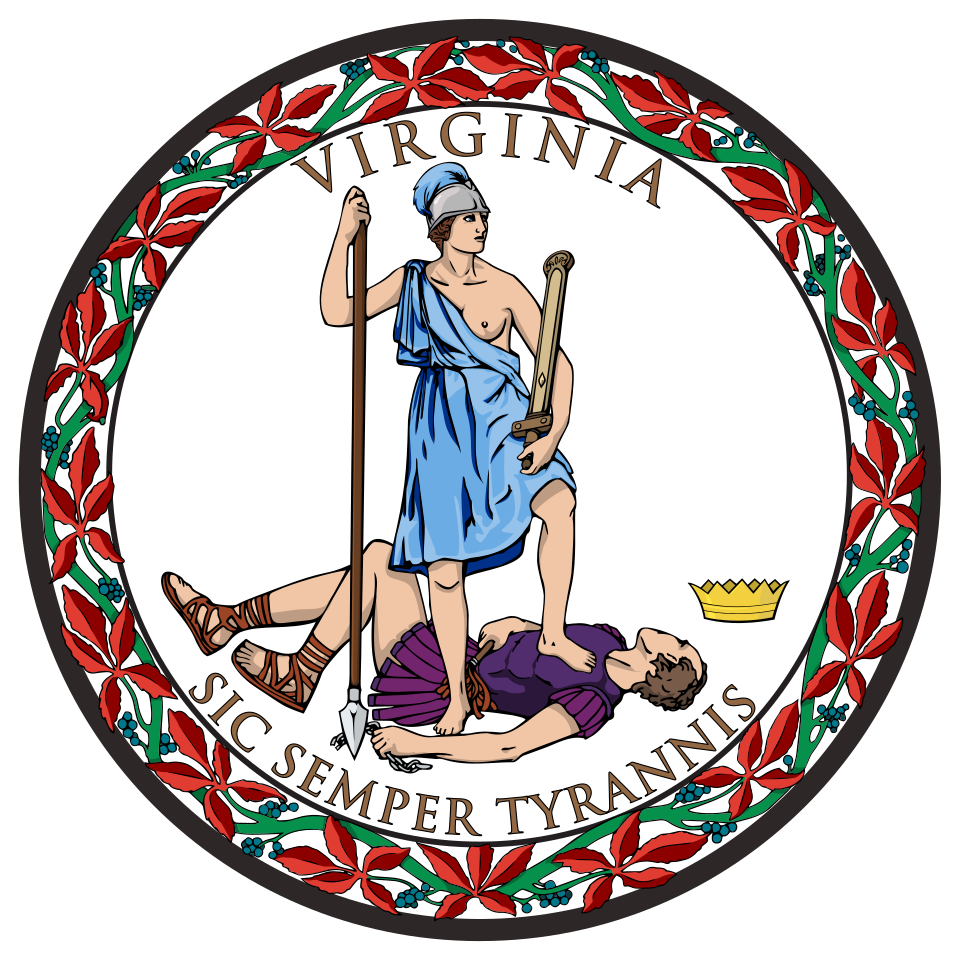
Its power derives not from minimalism but from dense, unapologetic allegory. Against an azure field, the state seal depicts Virtus, the spirit of the commonwealth, portrayed as an Amazonian warrior. One hand rests on a sheathed sword, the other grips a spear. Beneath her foot lies a fallen tyrant, his crown cast aside. Her left breast is exposed. Below the scene runs the motto: Sic Semper Tyrannis—“Thus always to tyrants.”
This is not a flag meant for casual reproduction or decorative neutrality. It is a manifesto rendered in silk and dye.
Its resonance is amplified by Virginia’s unique geopolitical position. The Commonwealth is no distant periphery; it is the historical and literal gateway to federal power. The national capital was carved from its northern edge, and the White House sits just across a narrow river. The seat of centralized authority stands permanently within Virginia’s line of sight.
That proximity transforms the motto from historical flourish into living admonition. The danger of tyranny is not portrayed as a foreign threat or a bygone monarchy—it is presented as a perpetual risk inherent in concentrated power itself. The fallen ruler is deliberately generic. He could be a king of 1776, a would-be autocrat of 1861, or any future leader who exceeds constitutional bounds.
The flag thus asserts Virginia’s identity as both cradle of revolution and enduring counterweight—a sovereign tradition of resistance embedded directly beside the nation’s political core.
From a strict vexillological perspective, critics may object to the seal, the text, the complexity. But to evaluate Virginia’s flag solely by aesthetic minimalism is to misunderstand its function. The so-called golden rules aim at instant recognition and broad reproducibility. Virginia achieves something rarer: moral clarity.
Every element is deliberate. Virtus’s exposed breast is not provocation but classical symbolism: strength unarmored, virtue unhidden. The slain tyrant is not gratuitous violence but thesis statement. Liberty, the flag insists, is not preserved by sentiment alone. It is defended through resolve, sacrifice, and the willingness to confront power when it metastasizes into oppression.
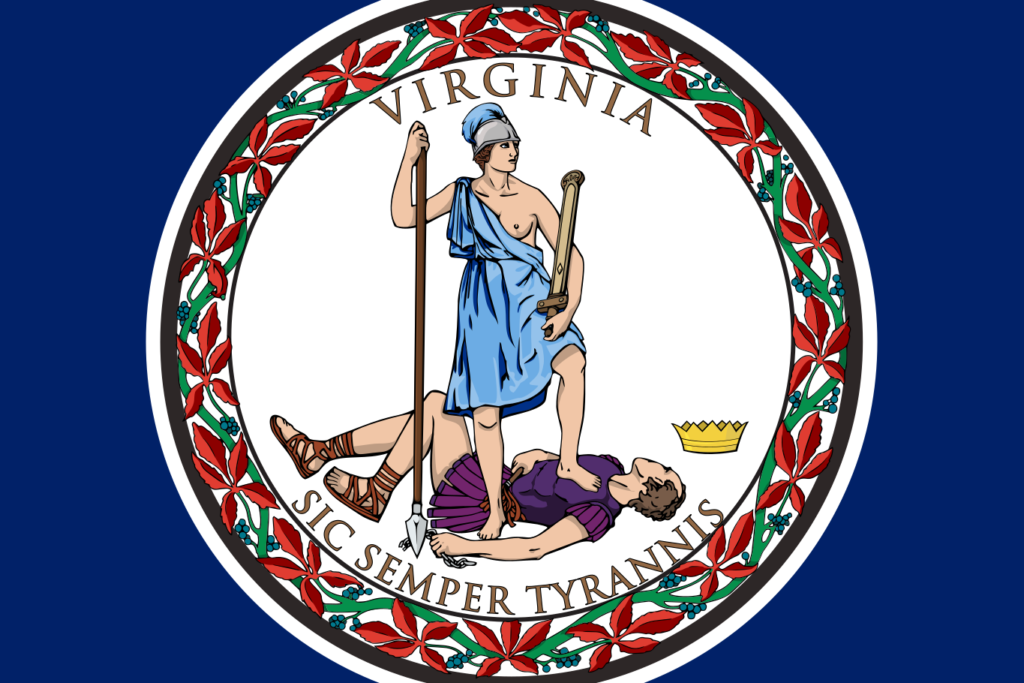
Where most state flags dissolve into a blur of eagles, shields, and vague prosperity, Virginia’s refuses anonymity. It is confrontational by design. It declares that some principles are too consequential to be softened for graphic tidiness.
By placing a vivid scene of tyrannicide at the heart of its symbol while hosting the federal government on its doorstep, Virginia performs a sustained act of symbolic inversion. Proximity to power becomes not submission, but surveillance. The flag stands as a permanent visual sermon: authority exists only on sufferance of the governed.
In this sense, Virginia’s banner is a masterpiece of vexillological defiance. It breaks every rule because the message it carries transcends design convention. It warns power, memorializes resistance, and promises accountability.
In the shadow of Washington, D.C., Sic Semper Tyrannis is not antique Latin—it is a living political philosophy, woven and raised daily. The Commonwealth’s flag does not decorate authority. It challenges it. And in doing so, it may well be the most honest state symbol in the Union.